

-
devcreation
Warehouse Photography: How to Showcase Logistics Spaces That Win Clients
Professional graphics are crucial for drawing customers and establishing a company’s credibility in the cutthroat logistics sector of today. Businesses can highlight their infrastructure, storage capacity, operational effectiveness, and working atmosphere with the use of Warehouse photography. Strong first impressions are made by high-quality photos, which also help prospective clients grasp a business’s capabilities. Professional warehouse photos convey dependability, organization, and professionalism, whether they are used on websites, brochures, or marketing campaigns.
Why Warehouse Photography Matters for Logistics Businesses
Expert warehouse photography enhances company identification and helps logistics companies showcase their facilities. Before selecting a logistics partner, clients frequently assess infrastructure, storage capacity, and operating capabilities. Clear photos offer important insights into how companies handle daily operations, transportation, and inventories.
Building Trust and Business Credibility
Genuine photos show professionalism and openness. Potential customers can assess equipment, workspace organization, and storage arrangements with a well-taken warehouse picture. These graphic elements inspire confidence and stimulate commercial queries.
Businesses can also invest in professional industrial photography to showcase their facilities, equipment, and operational processes with greater clarity.
Showcasing Infrastructure and Storage Capacity
Important building aspects that convey operating effectiveness and preparedness can be highlighted in professional photos.
- Inventory areas and storage racks that are arranged.
- Large spaces for loading and unloading.
- Equipment for handling modern materials.
- Facilities that are tidy and well-kept.
- Systems for distribution and storage that are effective.
These components aid clients in comprehending the company’s infrastructure quality and logistics capabilities.
Essential Areas to Capture in Warehouse Photography
To produce a comprehensive visual picture, a successful warehouse photography session should capture several areas of the building. Businesses are better able to communicate their services when infrastructure, personnel, and operational activities are captured.
Warehouse Interior and Storage Systems
One of the most crucial places to take pictures is the warehouse interior. Wide-angle photos highlight well-organized storage racks, inventory sections, roomy aisles, and effective use of available space. Cleanliness, order, and expert facility management are communicated through appropriate framing.
Loading Docks and Daily Operations
Loading docks represent an essential part of logistics operations. Capturing trucks, forklifts, packaging activities, and material movement demonstrates operational efficiency. Businesses can use warehouse now photos to present authentic daily activities and highlight their active working environment.
Employees and Workplace Activities
Employee photos establish a personal connection with prospective clients. Pictures of warehouse employees handling inventory, examining goods, and using machinery show professionalism, cooperation, and workplace safety.
Creative Warehouse Photography Ideas for Better Visual Impact

Ordinary industrial locations can be transformed into captivating marketing assets through creative photographic approaches. Companies can experiment with various warehouse photography ideas to showcase their operational strengths and infrastructure.
Wide-Angle and Aerial Photography
Large storage areas are captured using wide-angle photography, which also produces a powerful feeling of scale. An overhead view of loading zones, warehouse layouts, and the surrounding infrastructure can be obtained by aerial photography. These viewpoints aid consumers in comprehending the size and structure of the facility.
Product and Inventory Photography
Companies might investigate unique product photography ideas to highlight storage methods, inventory configurations, and packaged goods. Ordinary inventory is made visually appealing by creative product placement, well-balanced lighting, and eye-catching compositions.
Using professional product photography services helps businesses highlight packaging quality, product details, and inventory presentation effectively.
Close-Up and Detail Photography
A detailed warehouse picture can highlight packaging quality, barcode systems, machinery, and inventory management processes. Close-up images provide valuable information that wide-angle photographs may not communicate effectively.


Tips for Good Photos in a Warehouse Environment
Professional warehouse photography requires careful planning, suitable equipment, and effective lighting techniques. The right approach helps businesses capture clear, visually attractive images that accurately represent their facilities.
Lighting and Camera Angles
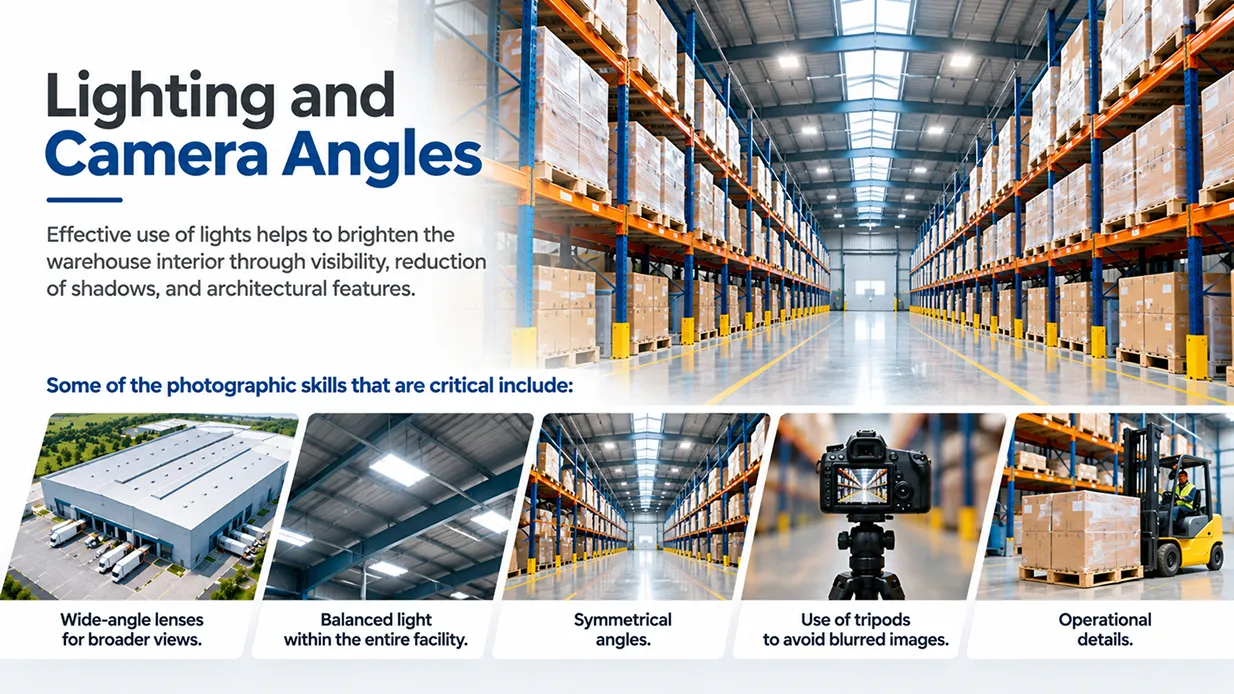
Effective use of lights helps to brighten the warehouse interior through visibility, reduction of shadows, and architectural features.
Some of the photographic skills that are critical include:
- Wide-angle lenses for broader views.
- Balanced light within the entire facility.
- Symmetrical angles.
- Use of tripods to avoid blurred images.
- Operational details.
Editing and Image Enhancement
Professional editing enhances image quality through corrections in exposure, color balance, and perspective. But care should be taken not to over-edit images since they could portray a false image of facilities. Original images of the warehouse now photos are helpful.
Choosing the Right Photography Equipment
Cameras with high resolution, wide-angle lenses, tripods, and the proper lighting equipment can be used to take pictures of an industrial setting effectively. The choice of equipment depends on the available space and lighting and marketing purposes.
The Role of Warehouse Photos in Increasing Customer Base
High-quality warehouse photos aid in business growth through better presentation of the brand across several marketing channels. Professional pictures allow potential clients to get familiar with the company’s infrastructure, services, and abilities before any inquiry.
Strengthening Online Business Presence
Businesses can incorporate professional photos on their website, Google Business Profile, and social media pages. Visuals assist in improving presentation of the brand and prompting potential customers to explore the services.
Creating Effective Marketing Campaigns
Different warehouse photography ideas can support promotional campaigns by highlighting storage capacity, advanced equipment, and operational efficiency. Combining facility images with unique product photography ideas helps businesses communicate their services more creatively.
Best Marketing Platforms for Warehouse Images
Marketing Platform | Benefits of Professional Images |
Business Website | Showcases infrastructure and builds credibility. |
Social Media | Improves visual engagement and brand awareness. |
Company Brochures | Presents facilities and operational capabilities. |
Sales Presentations | Supports client meetings and business proposals. |
Google Business Profile | Helps customers understand the business environment. |
Showcasing Products and Operational Capabilities
Logistics companies need to integrate pictures of facilities along with those of operations. Pictures of inventory management, packaging, inspection, and shipment will aid in conveying efficiency of operations.
For effective visual storytelling, businesses should focus on:
- Organized inventory management.
- Modern equipment in warehouses.
- Professional activities of employees.
- Packaging and shipment operations.
- Cleanliness and safety standards.
Explore Professional Visual Solutions for Modern Businesses to enhance brand visibility and build customer trust through quality photography.
Conclusion
Good professional warehouse photography is beneficial for logistics companies, as it highlights their infrastructure, efficiency, and reliability. Good photos build trust in your company and make a good impression on customers who might want to do business with you. Creative images contribute to marketing communication.