
-
devcreation
Food Photography Ideas: Tips, Styles & Creative Inspiration
Making a dish seem good is only one aspect of food photography. A good photograph should convey the dining experience as well as freshness, taste, and texture. The appropriate food photography ideas may showcase food in a natural and professional way for restaurants, cafes, food companies, and social media.
Best Food Photography Ideas for Attractive Images
Planning is the first step in good photography. Determine the tone, color scheme, background, props, and visual style prior to filming. Because they maintain the dish as the primary focus, simple food photography ideas are more effective than elaborate arrangements.
A few styling decisions can enhance the outcome:
- Make use of fresh, naturally colored, and textured ingredients.
- Select garnishes that are appropriate for the dish.
- Choose dishes and accessories that fit the theme.
- Maintain a tidy and harmonious background.
- Make sure the area surrounding the topic is sufficiently empty.
Creative Photoshoot Ideas for Food
Food content becomes more interesting when it goes beyond simple product photos. Images with movement and personality are produced by experimenting with imaginative creative photoshoot ideas. Take pictures when you pour sauce, cut cake, lift noodles, sprinkle herbs, or serve a drink.
Seasonal arrangements work well for limited-edition goods, summer drinks, winter treats, and celebratory dinners. Ingredient arrangements, preparation scenes, texture close-ups, and lifestyle photographs are some more imaginative creative photoshoot ideas. To improve the overall quality and presentation of your images, professional Food Photography can help showcase every dish with greater detail and visual appeal.
How to Use Food Photography Lights
Color, texture, freshness, and depth are all significantly impacted by lighting. The meal should appear natural without harsh shadows thanks to carefully thought-out food photography lights.
An excellent place to start is with soft window light. Artificial food photography lights, like LED panels or softboxes, can produce reliable results for more control.
Practical lighting techniques consist of:
- The main light should be positioned somewhat to the side.
- To soften harsh shadows, use a diffuser.
- To make gloomy areas brighter, add a reflector.
- Steer clear of combining different color temperatures.
- Examine reflections on glossy surfaces and glass.
Choosing the Right Camera Angle
It is easier to present each dish from its best perspective when one is aware of the many different camera angles in photography. For salads, pizzas, thalis, and table spreads, a top-down view is ideal. While eye-level images work well for burgers, sandwiches, drinks, and stacked desserts, a 45-degree angle provides a natural dining viewpoint.
The ideal view of the dish’s form, layers, and texture can be found by experimenting with different camera angles in photography. Along with still images, a well-planned Food And Beverage Video can capture preparation, movement, texture, and the complete dining experience.
Essential Food Photography Techniques
Styling, composition, focus, lighting, and timing are all important in professional food photography. Effective food photography techniques direct attention to important elements.
While narrow depth of field can distinguish the dish from the background, the rule of thirds establishes equilibrium. When emphasizing toppings, layers, or textures, proper emphasis is crucial.
Practical methods consist of:
- Pay attention to the dish’s most enticing feature.
- To direct the viewer’s gaze, use natural lines.
- Make important ingredients easy to see.
- Capture natural movement, drips, steam, or crumbs.
- Take caution when editing to avoid making food appear unrealistic.
Accurate color is another crucial component of food photography techniques. Proper white balance minimizes editing and preserves natural ingredients.
Photography Tips for Food Styling
During a shoot, little elements can have a big impact. Before putting the finished dish in the frame, set up the background, lights, props, and camera position, according to practical photography tips for food. This is particularly helpful for delicate garnishes, hot meals, drinks, and ice cream.
Checking the dish prior to each shot is another helpful set of photography tips for food. Make sure the toppings appear fresh, adjust the garnishes, clean the edges, and eliminate any undesirable crumbs.
Food Photography Styles and Their Best Uses
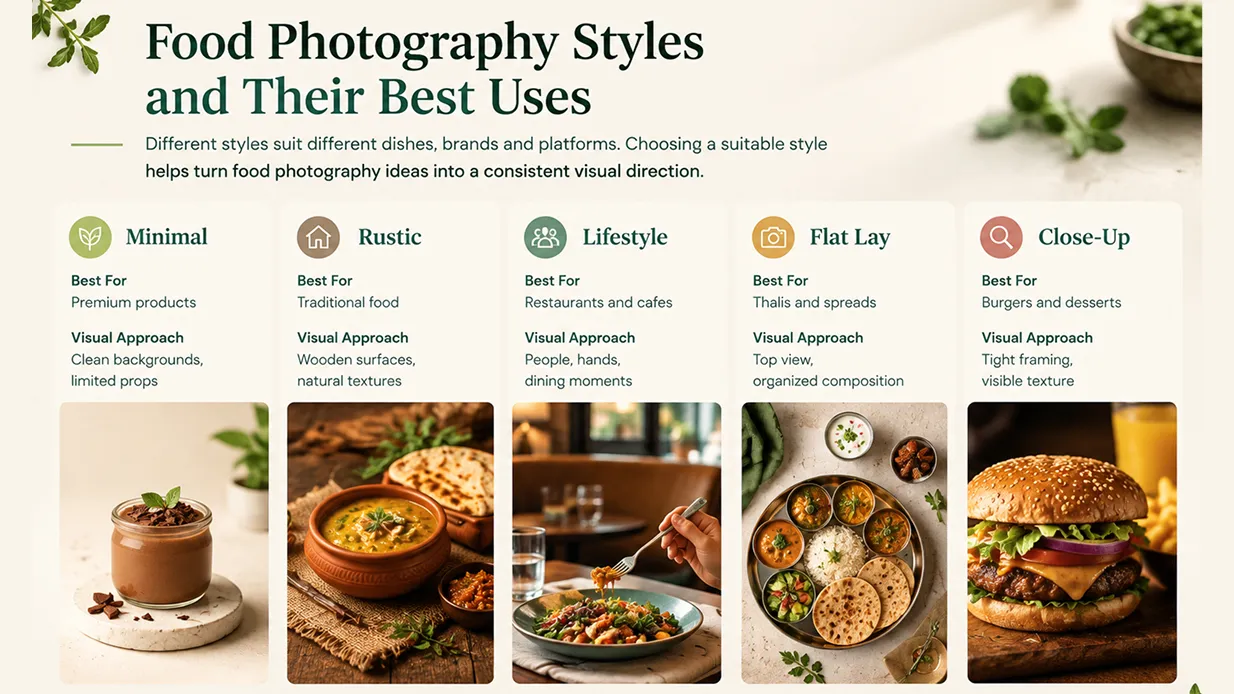
Different styles suit different dishes, brands, and platforms. Choosing a suitable style helps turn food photography ideas into a consistent visual direction.
Style | Best For | Visual Approach |
Minimal | Premium products | Clean backgrounds, limited props |
Rustic | Traditional food | Wooden surfaces, natural textures |
Lifestyle | Restaurants and cafes | People, hands, dining moments |
Flat Lay | Thalis and spreads | Top view, organized composition |
Close-Up | Burgers and desserts | Tight framing, visible texture |
Food Photography for Social Media
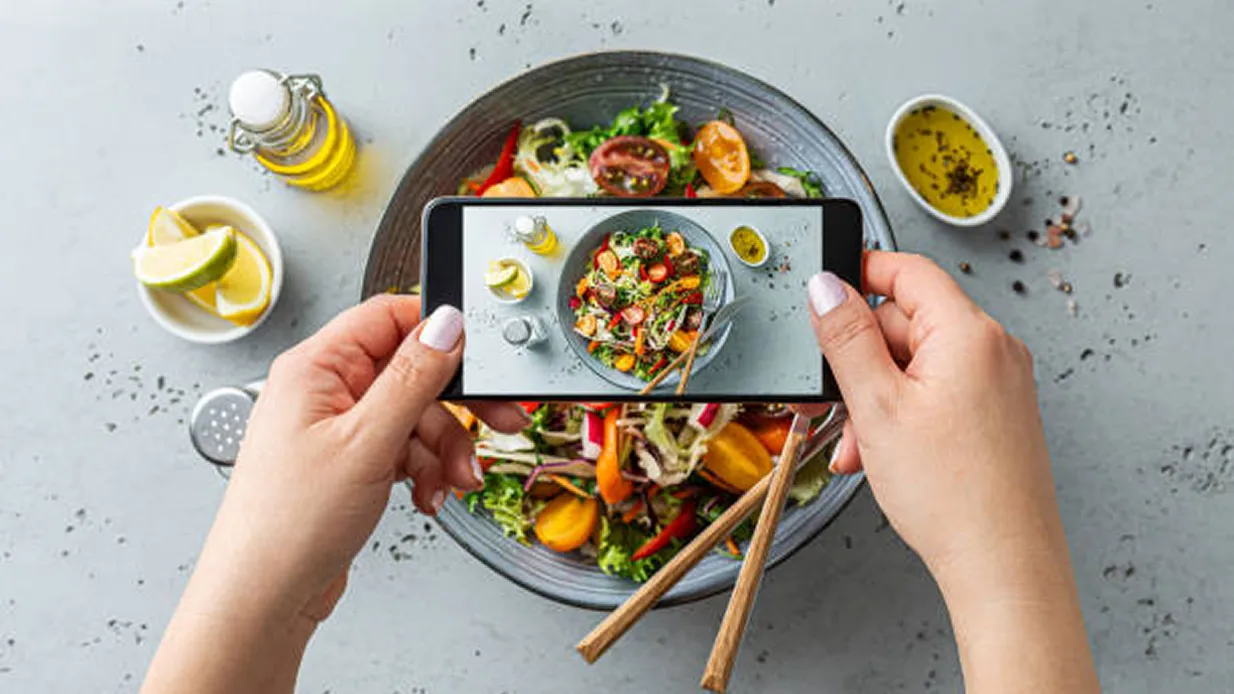
Images on social media must grab attention fast. Content is kept interesting by close-ups, vertical framing, movement, and straightforward narrative. Good food photography ideas should also capture the essence of the brand.
A food brand might choose clean compositions, whereas a cafe might utilize lifestyle photography. Content is kept varied by combining lifestyle and preparation photos. For more inspiration on creating appetising and detailed food imagery, explore Delicious Visuals That Capture Every Detail.
Food Photography for Restaurants and Brands
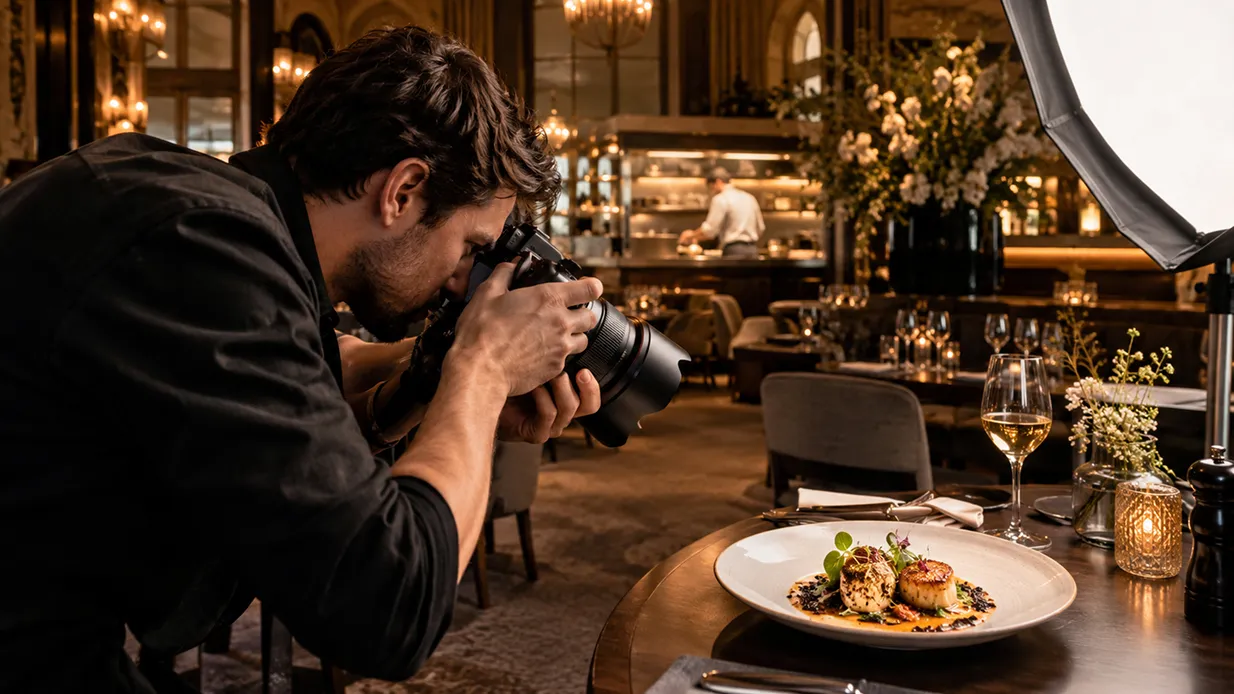
Images are necessary for menus, websites, delivery services, ads, and social media for restaurants and food brands. For every channel, prepare a variety of shot types.
Campaigns benefit greatly from hero images, menu photos showcase specific items, close-ups emphasize texture, lifestyle photos evoke feelings, and ingredient photos convey quality. The whole brand appearance becomes more professional and identifiable when food photography ideas are consistent.
Common Mistakes to Avoid
Poor lighting, an abundance of props, sloppy plating, artificial colors, and excessive editing are common errors. Content may become boring if the same angle is used repeatedly. Instead than competing with the food, props should enhance it.
Conclusion
Everyday dishes can be transformed into visually engaging material with the correct food photography ideas. Stronger outcomes are a product of smart composition, appropriate angles, thoughtful styling, and good lighting. Restaurants and food companies may produce more polished and consistent visuals with persistent practice and a clear design strategy.