
-
devcreation
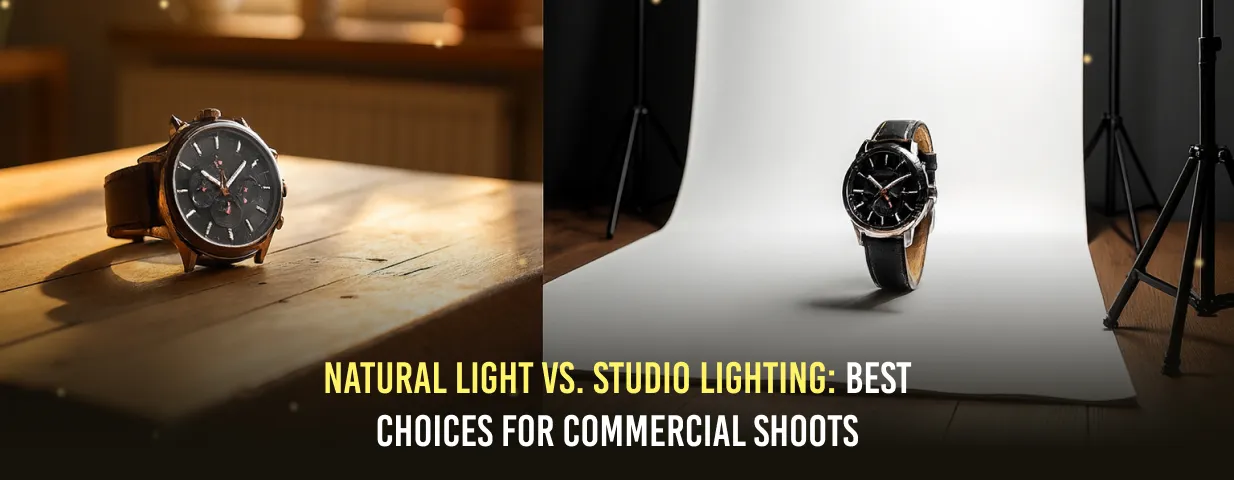
Natural Light vs. Studio Lighting: Best Choices for Commercial Shoots
When it comes to commercial and industrial photography, one of the most critical decisions a photographer makes is choosing the right lighting setup.
Should you go with the raw, organic charm of natural light?
Or should you lean on the consistency and control that studio lighting offers?
As a professional product photographer in Ahmedabad, we shoot everything from shiny metal machine parts under harsh sunlight to handcrafted jewelry in a perfectly lit studio. And I can tell you this – there’s no one-size-fits-all answer. It depends on your subject, the mood you want to create, your brand’s aesthetic, and even your budget.
Let’s break it down.
What is Natural Light?
Natural light is light that comes from the sun. It can be direct sunlight, diffused sunlight on a cloudy day, or even window light bouncing around a room.
This type of lighting is a favorite among creative product photography professionals for its soft shadows, natural tones, and authentic feel.
When to Use Natural Light in Commercial Shoots?
Fashion Lookbooks: Want a model to appear candid, fresh, and real? Natural light is your best friend.
Lifestyle Product Photography: Shooting products in real-life settings – like food on a kitchen counter or skincare near a bathroom window – looks more believable in natural light.
Budget-Conscious Campaigns: Startups or small brands may not have a studio budget. Natural light is free, after all!
Pros of Natural Light
Cons of Natural Light
What is Studio Lighting?
Studio lighting involves artificial sources like strobes, softboxes, LED panels, and reflectors. You control everything – intensity, direction, diffusion, and color temperature.
This is why professional product photographers often choose it for high-end commercial jobs.
When to Use Studio Lighting?
E-commerce Product Photography: For consistency across hundreds of SKUs.
Industrial Photography: Machinery or factory interiors require precise lighting to highlight detail.
High-End Campaigns: Luxury goods need to look flawless. Studio lighting helps sculpt products to perfection.
Pros of Studio Lighting
Cons of Studio Lighting

Natural Light vs. Studio Lighting: A Head-to-Head Comparison
| Factor | Natural Light | Studio Lighting |
|---|---|---|
| Control | Low | High |
| Consistency | Low (depends on weather/time) | High (fully adjustable) |
| Cost | Free | Expensive (initial investment) |
| Setup Time | Minimal | Moderate to high |
| Learning Curve | Beginner-friendly | Requires technical skill |
| Creative Flexibility | Limited but beautiful | Maximum - endless lighting setup |
Choosing Based on the Genre of Commercial Photography
1. Creative Product Photography
2. Portrait Photography
3. Commercial and Industrial Photography
Can You Combine Both?
Absolutely. Many top-tier photographers blend natural and artificial lighting to get the best of both worlds.
For example, in an indoor lifestyle shoot, we often use window light as key light and a soft fill light (like an LED panel) to balance shadows. The result? A polished yet natural image that converts better for brands.
Final Thoughts: What’s Best for Your Brand?
At the end of the day, the decision isn’t just about light – it’s about the story you want to tell.
- If your brand is relatable, fresh, or lifestyle-focused, natural light can elevate your shoot.
- If your brand is premium, technical, or requires precision, studio lighting is your go-to.
As a professional product photographer at Commercial Photography, we tailor our lighting strategy based on your goals – whether it’s for e-commerce, ad campaigns, or industrial catalogs.
Don’t let lighting be an afterthought. It’s the backbone of impactful visual storytelling.