
-
devcreation
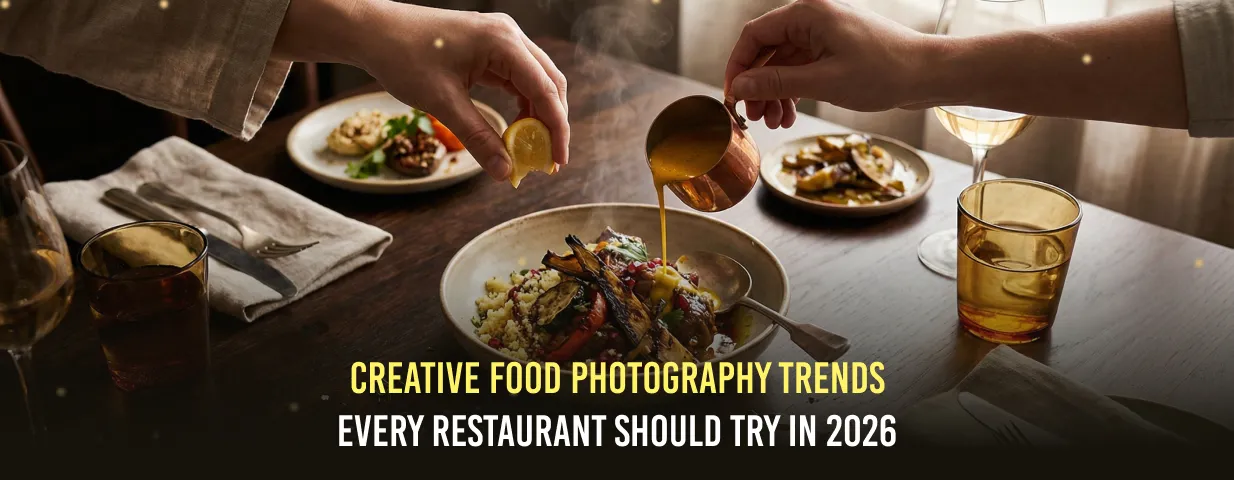
Creative Food Photography Trends Every Restaurant Should Try in 2026
Think about the last time you ordered food online.
Did you read every word in the description?
Or did you look at the photo, feel hungry, and tap “Add to cart”?
That’s the power of creative food photography.
In 2026, restaurants are not just selling food.
They’re selling mood, moments, and stories – and all of it starts with a single picture.
If you run a café, cloud kitchen, fine-dining, or a small family restaurant, this guide will show you how professional food photography can change the way people see (and choose) your brand – especially if you’re in a growing food city like Ahmedabad.
Let’s break it down in simple, no-jargon language.
Why Food Photos Matter More Than Your Menu Text
Imagine two restaurant listings:
- Restaurant A: Blurry photos, weird yellow light, plates look messy in a bad way.
- Restaurant B: Clean, bright photos, steam on the food, warm colors, inviting mood.
Even a 10-year-old can tell you which one feels more tasty and safe.
Great creative food photography helps you:
- Grab attention in less than 2 seconds
- Make your food look fresh, hot, and worth the price
- Build trust that your kitchen is clean and professional
- Stand out among hundreds of similar listings and posts
Now let’s look at the big trends restaurants are using in 2026 – and how you can apply them, step by step.
Trend 1: “Perfectly Imperfect” Plates
Earlier, food photos looked like museum pieces – everything too neat, too stiff, too fake.
Now the trend is perfectly imperfect.
What this means:
- A few crumbs on the table
- Some sauce is dripping on the side
- Fries spilling slightly off the plate
- A slice of pizza is already missing
It still looks neat and appetising – but real.
How you can try this
- Ask your photographer to shoot before and after shots
• Full plate
• Half-eaten plate - Let one spoon rest inside the bowl
- Allow a little natural mess that says, “Someone just started eating.”
This style makes your viewers feel like,
“If I were sitting there, I’d eat exactly like this.”
Trend 2: Hands in the Frame (Human Touch)
Food alone is nice.
Food with people is emotional.
One of the strongest trends in creative food photography right now is adding hands and small actions into the frame.
Examples:
- A hand squeezing lemon over tandoori
- Fingers dipping a fry into the sauce
- Two people clinking coffee mugs
- A child grabbing a slice of cake
Why this works
• It adds life and warmth to the photo
• Helps people imagine themselves in that moment
• Makes your restaurant look friendly and welcoming
Where to use it
- Instagram feed and stories
- Website home page hero banner
- Posters and standees inside your restaurant
Next time you plan a shoot, don’t just shoot plates.
Plan at least 5–10 shots with hands and people interacting with the food.
Trend 3: Mood Lighting – Bright vs. Dramatic
Lighting is like the “background music” of your food photo.
You don’t always notice it, but you feel it.
In 2026, two styles are especially popular:
1. Bright & Fresh
Best for: cafés, breakfast places, salad bars, dessert shops, home-style food.
Looks like:
- Daylight-inspired brightness
- Soft shadows, no harsh contrast
- Light backgrounds (white, beige, pastel colors)
- Fresh greens, colorful fruits, clean plates
This gives a happy, light, healthy vibe.
2. Dark & Moody
Best for: grills, sizzlers, steaks, fine dining, bars, pizza, and rich curries.
Looks like:
- Dark backgrounds (charcoal, deep brown, bottle green)
- Strong highlights on the food
- Rich textures, steam, reflections
- Deep shadows that add drama
This gives a premium, bold, intense vibe.
What you should do as a restaurant
- Pick one style that suits your brand
- Stick to it across your menu, website, and social media
- Tell your photographer clearly:
“We want a bright & airy look” or
“We want deep, moody, gourmet-style images.”
Consistency is what makes your photos feel like a brand, not random clicks.
Trend 4: Top-View Table Stories (Flat Lays with a Purpose)
The flat lay (top view) is now smarter.
Instead of putting random items on a table, restaurants are using top-view shots as mini stories.
Picture this:
- A full Gujarati thali shot from above, every katori visible
- A brunch spread with waffles, coffee, juice, butter, and cutlery
- A pizza in the middle with sides, sauces, herbs, and drinks around it
Why this is powerful
• One picture can show your variety and quantity
• Perfect for combos, thalis, buffets, and group dining
• Makes people feel, “Wow, look at how much we’ll get!”
How to plan it
• Choose 1–3 hero dishes
• Add supporting items: chutneys, breads, sides, drinks
• Use a neat table or backdrop (wood, stone, or solid color)
• Avoid over-crowding – leave some breathing space
These shots are great for:
• Website banners
• Menu category covers
• Big hoardings or in-store display screens
Trend 5: Action Shots – Making Food “Move”
Still food is nice.
Moving food – even in a photo – is addictive.
Action shots capture a moment where something is happening:
- Cheese stretching from a slice
- Sauce being poured on pasta
- Coffee is being poured into a cup
- Sizzler releasing steam
- Sugar falling like rain on a dessert
If you freeze these moments at the right time, the viewer almost tastes the dish.
How to use action shots
- Ask your photographer to capture a burst of images while someone:
• pours, cuts, sprinkles, stirs, or dips - Pick the frame with the most fluid motion
- Use these pictures as:
• Instagram reel covers
• Highlight images on your website
• Main image of a hero dish on delivery apps
Pro tip: record a short vertical video of the same action.
One setup, two outputs: a great photo + a reel.
Trend 6: Minimal, Clean Menu Shots
Not every photo needs props, humans, and drama.
For menus and delivery apps, simple works best.
The trend here is minimal, clean, straight-to-the-point shots:
- One dish, one plate, simple background
- Clear view of what’s inside
- No heavy decorations that confuse people
This is especially useful for:
- Swiggy / Zomato menus
- QR-code digital menus
- Food delivery websites
- Cloud kitchens
When customers are deciding quickly, they don’t want to decode complicated pictures.
They want to see exactly what they’ll get.
Trend 7: Brand-Based Props & Backgrounds
This is where professional food photography really shines.
Instead of using random plates and napkins, brands are now using props that match their identity:
- Rustic dhaba-style place? Use steel plates, brass glasses, wooden tables.
- Modern café? Use ceramic mugs, pastel plates, clean marble-like backgrounds.
- Premium fine-dine? Use dark plates, linen napkins, elegant cutlery, candles or glassware.
Over time, people subconsciously start to recognize your look.
Even if your logo isn’t visible, they feel,
“Oh, this looks like that place I follow on Instagram.”
That’s branding through photography.
Trend 8: Local Flavor, Modern Style (Perfect for Ahmedabad)
If your restaurant is in or around Ahmedabad, you have a big advantage:
Local food culture is strong – and extremely photogenic.
Think:
- Farsan, khandvi, patra, dhokla, khaman
- Kathiyawadi thalis
- Street-style sandwiches, dosas, and pav bhaji
- Kulfi, rabdi, matka desserts
Now mix this with modern styling:
- Traditional food on contemporary plates
- Clay cups on clean, modern backdrops
- Steel thalis shot with cinematic lighting
- Chaas, lassi, or soda in stylish glassware
This mix of local + modern feels fresh, relatable, and Instagram-ready.
For any studio doing food photography in Ahmedabad, this style is gold.
Trend 9: Platform-Specific Photos (Not One-Size-Fits-All)
One big mistake many restaurants make:
They use the same image everywhere.
But each platform behaves differently:
- Instagram / Facebook – works great with creative, storytelling shots
- Reels / Shorts – need vertical visuals, strong action, bold framing
- Swiggy / Zomato – require clean, clear dish photos that show the food accurately
- Website – needs hero banners, ambience shots, and menu shots
When you plan your next shoot, don’t just say,
“Click some good photos.”
Instead, say:
- “We need 15 images for Instagram”
- “10 for our menu and delivery apps”
- “5 for website banners and offline posters”
This makes your creative food photography more focused and efficient.
Do You Really Need a Professional Photographer?
You can click photos with your phone.
Many small restaurants do this in the beginning – and that’s okay.
But there comes a point when:
- Your food tastes better than your photos
- Your prices increase, but your visuals still look basic
- You want to attract bigger, better-paying customers
- You want to compete with popular, well-shot brands
That’s when professional food photography becomes an investment, not an expense.
A good photographer or agency will help you with:
- Concept & mood (how should your brand feel visually)
- Lighting setups that make your food look rich, not dull
- Styling – plates, cutlery, napkins, props
- Shooting for different platforms in one session
- Editing so that all images look consistent and branded
If you’re a restaurant owner in a competitive city like Ahmedabad, strong visuals can be the difference between “just another place” and “that restaurant everyone posts about.
FAQs
Some of the key trends include:
- Natural, slightly imperfect plating
- Hands and human moments in the frame
- Bright-and-fresh or dark-and-moody lighting styles
- Top-view table spreads that tell a story
- Action shots with pouring, sprinkling, or stretching food
- Minimal menu-focused shots for delivery platforms
- Brand-specific props, colors, and backgrounds
- Local food styled in a modern visual language
You don’t have to use all of them. Even 2–3 trends, used well, can transform your feed.
Creative food photography:
- Stops people from scrolling past your posts
- Makes your restaurant look more trustworthy and hygienic
- Increases the chances that someone will click your listing or open your menu
- Encourages customers to share your photos and tag your restaurant
- Makes your brand look professional when you run ads or work with influencers
In simple words: better photos → better attention → more visits and orders.
You don’t need a warehouse of props.
You can start with:
- 2–3 types of plates and bowls that match your brand
- Simple cutlery
- A couple of napkins in your brand colors
- One or two nice background surfaces (table tops, boards, or sheets)
- Some fresh ingredients (herbs, spices, lemons, chillies) for garnish
A skilled photographer can create a lot of variety with very few items.
The hero is always your food, not the prop.
That’s exactly what a good professional food photography team does.
They don’t just “click pictures.”
They help you:
- Understand your brand personality
- Choose a lighting and color style
- Plan a shot list for menu, social media, and delivery apps
- Style the food so it looks its best
- Deliver a full library of images you can use for months across platforms
If you’re looking for food photography in Ahmedabad, you can look for studios or agencies that show:
- Strong before/after examples
- Clear understanding of food styling
- Work that feels like a brand, not just random dishes