

-
devcreation
Catalogue Photography: Tips for Creating Professional Product Images
Building a strong brand identity and drawing in customers require high-quality product photos. Whether a company provides apparel, jewelry, gadgets, cosmetics, or home accents, expert illustrations aid consumers in comprehending their offerings before making a purchase.
In order to present products in a clear and appealing manner on websites, e-commerce platforms, brochures, and commercials, Catalogue photography is crucial. Every element goes into producing polished product photos that boost consumer confidence and aid in marketing initiatives, from choosing the ideal lighting to keeping backgrounds consistent.
What Is Catalogue Photography?
The goal of Catalogue photography, a professional photographic method, is to capture objects with precise colors, distinct details, and a unified presentation. It assists companies in presenting their collections in a systematic and eye-catching way.
Understanding Catalogue Shoot Meaning
The catalogue shoot meaning refers to a planned photography process where multiple products are captured using consistent lighting, camera angles, backgrounds, and styling. Its main objective is to highlight product features without unnecessary distractions.
Unlike lifestyle photography, which focuses on experiences and storytelling, catalogue images primarily communicate product appearance, design, quality, and functionality. Professional Product Photography helps businesses highlight product details, maintain visual consistency, and create attractive images for marketing purposes.
Why Professional Product Images Matter

Expert product photos aid companies in building trust and successfully conveying the value of their products. Additionally, they facilitate clients’ shopping by displaying crucial information prior to their purchase.
Among the main advantages are:
- establishing consumer trust with lucid images.
- showcasing the colors and textures of the product.
- keeping the presentation of the brand consistent.
- enhancing ads and product listings.
- encouraging well-informed purchasing choices.
Essential Tips for Professional Catalogue Photography
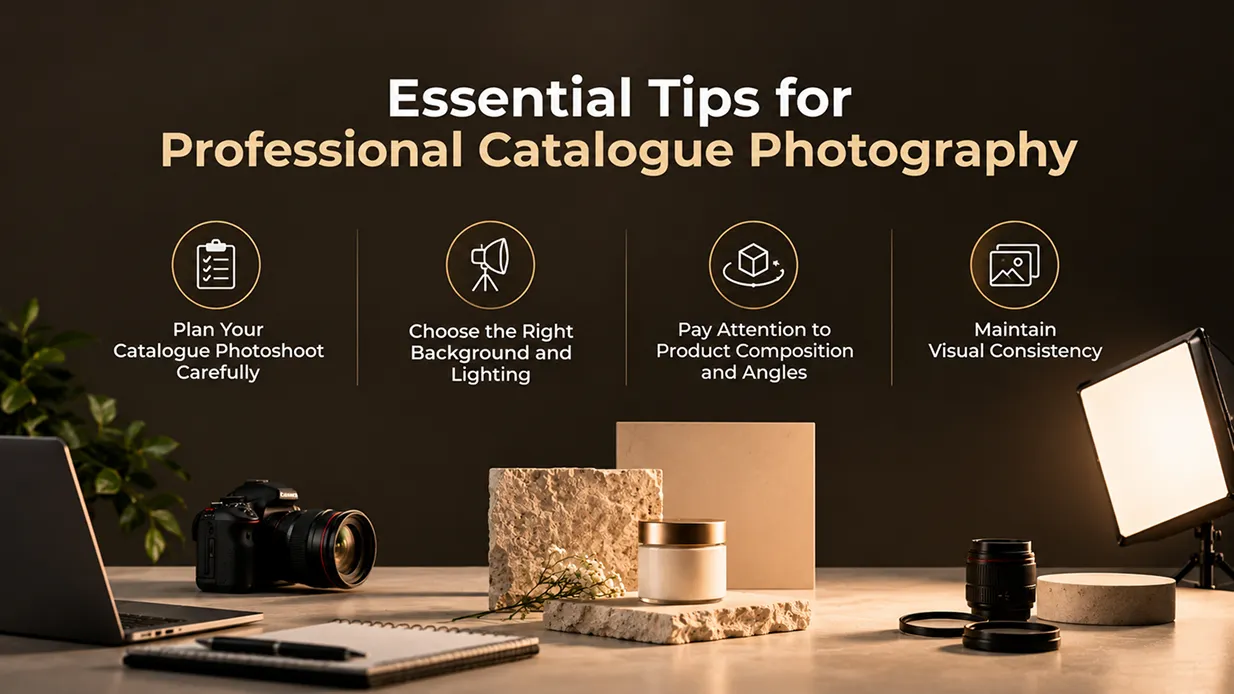
It takes careful planning, the right tools, and efficient photography procedures to produce great product photographs. Businesses can obtain consistent results by adhering to a systematic approach.
Plan Your Catalogue Photoshoot Carefully
A successful catalogue photoshoot begins with understanding product requirements and identifying the intended audience. Preparing products, selecting backgrounds, and deciding photography angles in advance can prevent unnecessary delays.
Companies should also compile a shot list with key features, close-ups, and various product angles. Photographers can easily handle various goods while maintaining quality when they are well-prepared.
Choose the Right Background and Lighting
Product appearance in photos is directly influenced by background choice and lighting. Because they make the product appear clean and draw attention to it, white or neutral backdrops are frequently employed.
Unwanted reflections and harsh shadows can be lessened using soft lighting. While maintaining the natural colors and textures of the product, studio lights, diffusers, and reflectors can produce balanced illumination. Professional Fashion Photography combines creative styling, lighting, and composition to showcase clothing and accessories in an appealing way.
Pay Attention to Product Composition and Angles
Products should be shown in professional catalogue photos from various angles. Customers can study designs, proportions, materials, and key characteristics from a variety of perspectives.
Capture Multiple Product Perspectives
Consider these five essential photography angles:
- Front View: Shows the complete product appearance.
- Side View: Highlights product shape and structure.
- Top View: Works well for packaging and flat-lay compositions.
- Close-Up View: Captures materials and fine details.
- Detail View: Emphasises unique features and craftsmanship.
Consistent framing and positioning make product collections look organized and professional.
Maintain Visual Consistency
Consistency is one of the most important aspects of catalogue photography. Similar lighting, image dimensions, backgrounds, and editing styles create a unified appearance across product collections.
A consistent visual style strengthens brand recognition and makes products easier to compare, particularly on e-commerce websites featuring multiple categories.
Creative Photography Ideas for Attractive Product Images
Creativity in professional photography should be an equilibrium between clarity of the product and creative visuals. Creative photography ideas enable brands to achieve unique visual effects without losing necessary product details.
Experiment with Props and Composition
Simple props, complementary colors, textured surfaces, and interesting arrangements can make product images more engaging.
For example, skincare products can be photographed with natural ingredients, while jewelry can be presented on elegant surfaces. These creative photography ideas add visual interest while maintaining a professional appearance.
Combine Lifestyle and Catalogue Photography
Lifestyle photography shows the integration of the product in real-life circumstances. The merging of lifestyle photographs along with the standard product photography makes people understand the product visually.
For instance, when a bag is captured in a plain backdrop, its aesthetics are revealed, and when captured in a lifestyle photograph, its styling is shown.
Common Mistakes to Avoid in Catalogue Photography
Good designs for products may fail to look professional if the photography is not done properly. Preventing typical errors can help improve the images.
Poor Lighting and Inconsistent Backgrounds
Uneven lighting can create distracting shadows and inaccurate colors. Similarly, frequently changing backgrounds may affect the visual consistency of product collections.
Excessive Editing and Unrealistic Colors
Overediting can misrepresent a product’s original appearance. Excessive color enhancement, artificial textures, and unnecessary effects may reduce customer trust.
Lack of Planning During a Catalogue Photoshoot
Poor planning during a catalogue photoshoot can result in missed product angles, inconsistent images, and repeated photography sessions.
Understanding the catalogue shoot meaning ensures photographers follow clear objectives and maintain consistency throughout the process.
Editing and Optimizing Catalogue Photos
Post-production is one way of ensuring that images become better and that the pictures of products are made ready for various marketing media.
Essential Techniques of Product Image Editing
Some of the most important techniques of editing are:
- Adjustment of brightness and exposure.
- Correcting white balance and colors.
- Removing dust and background distractions.
- Improving sharpness and product details.
- Maintaining consistent cropping and alignment.
These techniques help produce professional catalogue photos suitable for websites, advertisements, and printed materials.
Image Optimization for Different Platforms
Different platforms require specific image formats, dimensions, and resolutions.
|
Platform |
Recommended Approach |
Main Purpose |
|
E-commerce Websites |
Optimized JPEG or WebP images |
Fast loading and product clarity |
|
Social Media |
High-quality platform-sized images |
Engagement and visibility |
|
Printed Catalogues |
High-resolution print-ready images |
Sharp product presentation |
|
Online Marketplaces |
Consistent images following platform guidelines |
Clear product listings |
|
Digital Advertisements |
Properly cropped and optimized images |
Effective visual communication |
How Catalogue Photography Helps Businesses Grow

Professional catalogue photography plays an integral role in business growth by enhancing product appearance and creating a coherent brand experience. Exploring Professional Visual Solutions for Modern Businesses can help brands understand how high-quality imagery supports brand identity and effective marketing communication.
Strengthens Brand Identity
Coherent product images create a professional brand identity and increase the visibility of the business through digital and offline marketing channels.
Improves Customer Confidence
Clear images allow customers to evaluate product appearance and important features. This reduces uncertainty and helps shoppers make more informed decisions.
Supports E-commerce and Digital Marketing
High-quality product visuals improve the presentation of websites, promotional campaigns, and online listings. Combining professional images with creative photography ideas can make marketing communication more engaging.


Final Thoughts
Professional catalogue photography allows companies to market their products clearly and effectively. The use of correct lighting, correct composition, and proper editing helps produce images that effectively represent the products.
Frequently Asked Questions
Catalogue photography is taking pictures of products that are clear and consistent for websites, online marketplaces, catalogs, and marketing.
A camera, tripod, lens, lights, reflector, and proper background materials are typically used for getting good shots.
The catalogue shoot, meaning, signifies an organized shooting activity conducted with the aim of capturing images of products with clarity in regard to their looks and features.